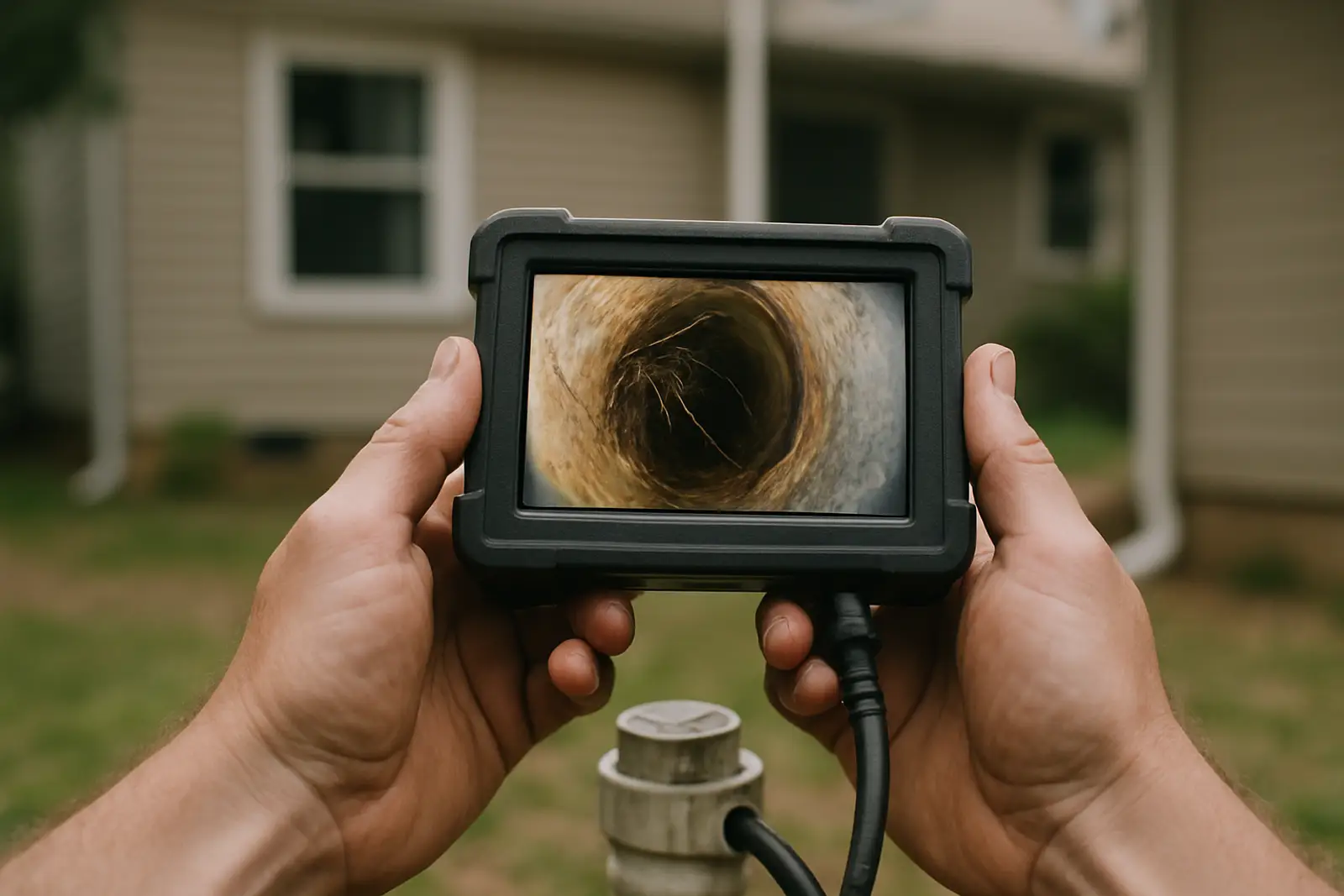
Sewer camera inspection prices
| Type of inspection | Typical range | Usual time |
|---|---|---|
| From an accessible outdoor or basement cleanout | $150–$350 | 30–60 minutes |
| Through a pulled toilet | $250–$400 | 1–1.5 hours |
| With locating, depth and surface marking | $200–$450 | 45–90 minutes |
| Pre-purchase scope with written report | $200–$400 | 45–90 minutes |
| Added to a drain clearing visit | $150–$300 | 20–45 minutes extra |
What you pay for in a sewer scope
The camera itself is a specialized tool: a waterproof head with lights, a self-leveling image so the picture stays upright, a push cable a hundred feet or more long, a monitor that records, and a transmitter for locating. That equipment, the plumber's time and the skill to read the footage are what the fee covers. Reading footage well matters. A shadow at a joint can be a crack or a stain, and a stretch of water can be a belly or just a slow section, and telling them apart takes experience.
Most inspections also include a short explanation on site. Ask for the video before the plumber leaves, along with a note of the distance to anything that looked wrong. If the footage shows roots, grease or scale rather than a break, cleaning is the next step, and the cost of hydro jetting is usually the number to compare against a repair quote.
When a camera inspection pays for itself
Three situations make the fee easy to justify. The first is a repeat clog: if the main line has been cleared twice in a year, the camera tells you whether you have roots that need regular cutting, a break that needs repair, or just buildup that jetting will fix. Without that answer, it's easy to keep paying for clearings that never solve anything.
The second is buying a house. A sewer lateral is one of the most expensive parts of a home to replace, and a standard home inspection doesn't look inside it. A few hundred dollars before closing can reveal a problem worth thousands. The third is a large repair quote. If someone recommends lining or replacement, ask to see the footage that supports it, and get a second opinion on the same video before you sign.
Costs that can come after the inspection
| If the camera shows | Typical next step | Typical range |
|---|---|---|
| Buildup or grease | Hydro jetting | $350–$900 |
| Roots at one or two joints | Root cutting | $250–$650 |
| One broken or sagging section | Spot repair | $1,500–$4,500 |
| Roots or cracks along much of the line | Trenchless lining | $3,000–$10,000 |
| Collapsed or Orangeburg pipe | Replacement | $4,000–$15,000+ |
What raises the price of a sewer scope
- No cleanout, so the camera goes in through a toilet or roof vent
- A line that has to be cleared before the camera can see anything
- A long or deep lateral, or one that runs under a driveway or slab
- Locating and marking several problem spots for a repair crew
- A written report formatted for a real estate transaction
- Scheduling outside normal business hours
How to avoid paying for a useless inspection
- Book the scope right after a clearing, when the pipe walls are visible
- Confirm the camera will go as far as the public main, not just a few feet
- Ask for the video file and the footage counter readings for each finding
- Don't scope a fully stopped line without a plan to open it first
- Be wary of an inspection offered only as part of a high-pressure sale
Sewer scope vs home inspection
Buyers sometimes assume the general home inspection covers the sewer. It usually doesn't. A home inspector runs water at fixtures and watches it drain, which catches a clogged trap but not a cracked lateral twenty feet under the lawn. A sewer scope is a separate service, usually booked with a plumber or a sewer inspection company. Some home inspectors offer it as an add-on with their own camera. Either way, the price falls in roughly the same range, and the value is in the video and how well it's explained. For what the camera actually finds, see sewer camera inspection.
Sewer camera inspection cost for home buyers
Buyers usually pay for the scope themselves during the inspection window, the same way they pay for the general home inspection. A pre-purchase scope with a written summary and the video typically costs $200 to $400. It's most valuable on homes built before about 1980, homes with mature trees between the house and the street, and homes that sat vacant. If the scope finds a problem, a repair estimate based on the video can become part of the negotiation, whether that ends in a price reduction, a credit at closing or the seller making the repair first.
Plan the access ahead of time. If the only way in is through a toilet, the seller should agree before the plumber pulls it. If the line turns out to be blocked, clearing it is a separate charge, and someone has to agree to pay it.
Is the camera free with a drain cleaning?
Some companies include a quick camera look with a main line clearing, and others charge for it separately. Neither is a trick, but it's worth knowing which you're getting. A brief look on the monitor to confirm the line is open is different from a full recorded inspection with distances, depth readings and a file you can keep. If you want the video for a repair decision or for your records, ask for a recorded inspection and expect to pay for it, usually $150 to $300 on top of the clearing when it's done on the same visit.
Sewer camera inspection cost by property type
| Property | What changes | Typical range |
|---|---|---|
| Single-family home with outdoor cleanout | Quick access, one lateral | $150–$350 |
| Older home with no cleanout | Toilet pulled or roof vent used | $250–$400 |
| Duplex or triplex on one lateral | Longer lateral, several branches | $200–$400 |
| Home on a long or deep lateral | More cable, locating needed | $200–$450 |
Sewer scope cost vs the cost of guessing
The reason to pay for a camera is that the alternatives are expensive guesses. Without video, a plumber can only clear the line and hope. If the cause is a broken section, the line will clog again, and three clearings at a few hundred dollars each can add up to more than the inspection plus a targeted spot repair. On the repair side, a contractor who quotes lining or replacement without footage is pricing a problem nobody has seen. The camera turns both of those into decisions based on evidence, which is worth far more than its price on any line with a history.
Getting the most from the fee
- 1
Ask what you'll receive
A video file, still images, distances and a short written summary are all reasonable to expect.
- 2
Watch with the plumber
Seeing the footage live lets you ask questions while the camera sits at each problem.
- 3
Ask for marks on the ground
If repair is likely, locating and marking now saves paying for it later.
- 4
Store the file
Keep it with your house records for the next plumber, the next buyer or an insurance claim.